Cloud Computing Salaries in 2025: What Mid-Career Pros Need to Know
Maximize your earning potential with data-driven insights, leadership strategies, and future-ready cloud skills.


You’ve spent years honing your cloud expertise now it’s time to make the salary to match it. In this 2025 salary guide, you’ll receive data-driven insights, negotiation strategies, and leadership positioning tips to elevate your compensation and impact.

Current Landscape – Where Do Salaries Stand in 2025?
In post-pandemic 2025, cloud computing remains a highly paid discipline but with nuanced trends based on skillset, geography, and leadership level.
Detailed Explanation:
Market strength remains robust. As enterprises continue migrating to multi-cloud, hybrid environments, and edge infrastructures, demand for seasoned cloud professionals keeps salaries elevated.
Leadership pays. Cloud Architects, Platform Leads, and Cloud Solution Engineers with 5+ years of experience commonly land compensation packages in the upper six figures, especially when total rewards (bonus + equity) are included.
Cloud specialties diverge in compensation. Expertise in:
AI/ML Ops
Kubernetes & Container Orchestration
DevSecOps
all command meaningful premiums, given their scarcity and impact.
Location matters especially for on-site roles. In metro tech hubs (e.g., San Francisco, NYC, Seattle), total comp can be 20–35% higher than in emerging markets or smaller metros. That said, remote positions are evening out some of that disparity.
Remote roles with cost-of-living adjustments still pay competitively though often slightly less than on-site roles in high-cost areas. Some companies offer location-agnostic pay to attract top global talent.
Michael’s Action Steps:
Map your current salary to peer benchmarks in your region and specialism.
Factor in total compensation base, bonus, equity, benefits when conducting comparisons.
Consider remote roles if your current metro doesn’t offer competitive pay but don’t neglect negotiation on location-adjustment caps.
Benchmarking Your Cloud Compensation in 2025
To assess your position, use reliable sources. Blend published salary data with peer networks and recruiter intel for visibility.
Detailed Explanation:
Start with reputable salary surveys. Data from sources like:
Industry recruiting platforms (e.g., levels.fyi, Dice, Hired)
Tech compensation reports (e.g., from Gartner, Robert Half, Cloud Native Computing Foundation)
These give benchmarks by role, years of experience, and geography.
Leverage internal and peer data. At your organization, use internal salary bands or talk discreetly with confident peers. Externally, networks like LinkedIn groups or community Slack/Discord channels can elevate your understanding.
Recruiter/agency insight matters. Engage with trusted recruitment professionals specializing in cloud roles they often know rising pay bands for roles you're targeting.
Focus on “Total Compensation Package” (TCP). TCP includes:
Base salary
Annual bonus or target variable
Equity (RSUs or stock options)
Benefits (health, 401(k) matching, wellness stipends)
Perks (education allowances, remote stipends, profit-sharing)
all factors shaping real take-home and long-term value.
Track pay growth year-over-year. For mid-career professionals, base salaries often grow 5–10% per year, with total compensation sometimes accelerating faster as equity vesting and bonus percentages compound.
Michael’s Action Steps:
Use at least three distinct benchmarking sources to triangulate your current value.
Compare not just base salary but TCP break down each component clearly.
Track your own salary increases over time to measure growth rate and areas of opportunity.
Key Drivers of Cloud Salary Growth
You can influence your compensation trajectory by aligning with sought-after skills, leadership responsibilities, and strategic business impact.
Detailed Explanation:
Technical specialization matters. Mastery in:
Infrastructure as Code (Terraform, Pulumi)
Kubernetes and cloud-native tooling (EKS, AKS, GKE, Istio)
AI/ML Ops pipelines (SageMaker, Vertex AI, MLflow)
drives higher compensation due to clear, rare value.
Leadership and influence boost compensation. Roles like Cloud Architect, Cloud Platform Lead, or Cloud Center-of-Excellence (CoE) Manager typically cross into six-figure TCP territory.
Vertical domain expertise pays up. If you combine cloud tech with depth in regulated industries (finance, healthcare, defense), your strategic value and payrises due to risk mitigation and compliance acumen.
Security & compliance edge. Cloud engineers with deep DevSecOps knowledge or certifications like Certified Cloud Security Professional (CCSP) or AWS Certified Security – Specialty stand out, especially in enterprise-grade environments.
Communication and influence. Elevating to a strategic partner presenting to executives, shaping cloud roadmaps, mentoring teams positions you for premium leadership pay bands.
Michael’s Action Steps:
Identify which of the above areas align with your passion and growth goals. Set a 12-month plan to deepen your expertise.
Begin taking on strategic tasks: architect design reviews, platform standardization committees, or cross-team tooling leadership.
Seek stretch assignments tying cloud infrastructure to business outcomes reduce costs, increase agility, or enable new products.

Section 4: Negotiation Strategies for Mid-Career Cloud Pros
When aiming for a salary increase or a new role back up your ask with clear value proofs and market data.
Detailed Explanation:
Build your case with data. Present salary benchmarks, highlighting comparable roles with names (but anonymized) and TCP numbers.
Frame your accomplishments quantitatively. Include metrics like:
“Reduced cloud cost by 25% through auto-scaling and rightsizing.”
“Enabled deployment time to drop from X days to Y hours.”
“Improved availability from 99.5% to 99.99% reducing downtime by X minutes per month.”
Don’t just ask for a raise propose your next move. E.g., “I’d like to take on a Cloud Architect role, leading multi-tenant infrastructure standardization. To align with this step up, I’m targeting a total compensation of $180K base + 15% bonus + equity.”
Use negotiation windows strategically. Annual reviews, project go-live success, or competing offers can be opportunities. Plan well ahead enter reviews armed with metrics and ask early.
Don’t accept “no” ask about career and compensation roadmap. If immediate bump isn’t possible, request a development and comp milestone plan, with target dates and metrics for next increase.
Michael’s Action Steps:
Draft a crisp two-page “Compensation Justification” doc with bullets and metrics. Keep it ready for review season.
Benchmark roles at your level (e.g., Cloud Architect in your region) and set a realistic but aspirational target TCP.
Prepare for pushback: rehearse responses like “I’d like to explore how I can reach market-competitive comp what performance targets would support that?”


Section 5: Career Paths & Compensation Projections
Mid-career cloud professionals can steer into several high-reward paths architecture leadership, platform ownership, or cloud advisory and each track carries different compensation potential.
Path Breakdown:
Cloud Architect / Solution Architect
Role: Design enterprise-scale cloud infrastructure, drive standards, own platform decisions.
Comp Range (2025):
Base: $140K–$180K
Total comp: $160K–$220K+ (depending on equity/bonus)
Driver: strategic visibility, business value, scalability impact.
Platform / DevOps / SRE Lead
Role: Lead DevSecOps pipelines, CI/CD strategy, platform reliability engineering.
Comp Range (2025):
Base: $130K–$170K
TCP: $150K–$210K
Driver: uptime improvements, automation ROI, team leadership.
Cloud Center of Excellence (CoE) Manager
Role: Define cloud frameworks, governance, migration strategies, training programs.
Comp Range (2025):
Base: $150K–$190K
TCP: $180K–$240K
Driver: organizational impact, cost governance, strategic cloud adoption.
Cloud Security/Compliance Lead
Role: Focus on securing cloud environments, regulatory compliance, security architecture.
Comp Range (2025):
Base: $140K–$180K
TCP: $160K–$220K
Driver: risk reduction value, audit readiness, compliance.
Independent Cloud Consultant / Fractional CTO
Role: Contractor/consultant for architecture, migrations, platform build-out.
- Hourly Rate (2025): $150–$300/hr
– Project Contract: $80K–$250K+ depending on scope
Driver: project-based flexibility, direct business value, scaled impact.
Michael’s Action Steps:
Align your career interests with these roles consider scope, leadership, lifestyle, and your ROI goals.
Map out a two-year plan: which skill gaps need closing? Which leadership experiences can you pursue?
If contemplating consulting, talk to peers, test small projects, and calculate whether freelance income outpaces your current TCP.


Section 6: Realistic Salary Expectations Across Regions
Compensation differs by geography urban tech hubs still lead, but remote models and distributed teams are blurring lines.
Detailed Explanation:
High-cost tech centers (e.g., SF Bay Area, NYC, Seattle):
Expect 20–30% higher base salaries, plus richer equity packages.
TCP for experienced architects often hits $220K–$300K+.
Secondary cities / emerging metros (e.g., Austin, Denver, Atlanta, Raleigh):
Typically 10–20% lower than top-tier hubs.
TCP range: $160K–$240K for similar roles.
Hybrid / remote roles with location-adjusted pay:
Some employers apply cost-of-living multipliers; others offer flat “market-neutral” rates.
Remote IPv6–based tools or SaaS firms often use flat pay: e.g., $150K base, plus equity and bonus.
International remote comp:
Tech standards in EU, Latin America, and parts of Asia lag behind U.S. levels, but currency fluctuations or global firms can offer competitive global comp.
Michael’s Action Steps:
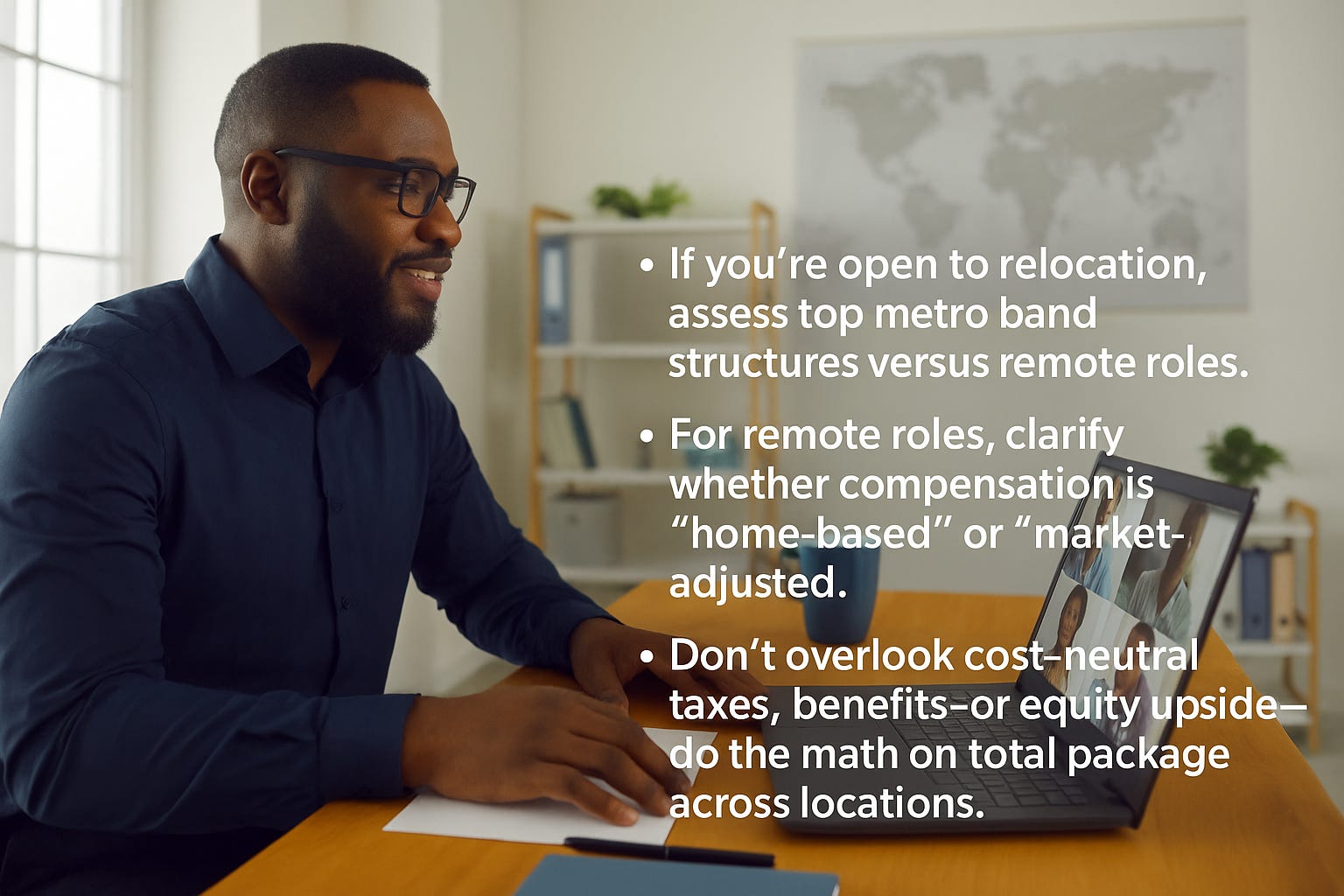
If you’re open to relocation, assess top metro band structures versus remote roles.
For remote roles, clarify whether compensation is “home-based” or “market-adjusted.”
Don’t overlook cost-neutral taxes, benefits, or equity upside do the math on total package across locations.
Section 7: Future Outlook – What’s Next for 2026 and Beyond?
Cloud compensation continues to evolve; staying ahead means investing in emerging domains and leadership visibility.
Detailed Explanation:
AI-Powered Cloud Services Boom. Expertise in building scalable AI infrastructures (e.g., managed model hosting, inference pipelines) will grow even more valued and compensated going into 2026.
Multi-Cloud and Edge Expansion. Architects with skills in orchestrating across AWS, Azure, GCP, and edge platforms (IoT, 5G) will attract higher pay as organizations seek unified platforms.
Green Cloud & Sustainability. As sustainability becomes a key enterprise directive, cloud engineers who optimize energy usage, carbon tracking, and green deployments may gain niche compensation boosts.
Platform Ownership Rising. Companies preferring strategic internal platforms over ad-hoc deployments will elevate platform leaders making this path increasingly lucrative.
Executive Cloud Roles. Positions like VP of Cloud Architecture or Chief Cloud Officer are emerging with compensation commonly in the mid-six to low-seven figures, albeit rare and competitive.
Michael’s Action Steps:
Explore AI/ML Ops trends pilot a project in generative AI or data-driven deployments.
Position yourself in multi-cloud or edge strategies publish a blog or speak internally on the topic.
Volunteer to drive cloud cost-efficiency or sustainability efforts build leadership credibility and impact.
Mid-Career Michael
You’re already experienced this guide speaks to your leadership goals, ROI mindset, and ambition for strategic influence.
Examples here focus on your level: architect, CoE leader, platform head anchoring your next comp leap.
We emphasize total comp, strategic value, and career direction not entry-level tactics or generic career tips.

Engagement Elements
Subheadings make the structure easy to scan.
Bold key ideas (e.g., “Total Compensation Package,” “Multi-Cloud”) highlight core takeaways.
Story/example: When you led a DevSecOps transformation cutting deployment times from weeks to hours, your TCP jumped quantified proof accelerates compensation.
Rhetorical questions sprinkled for reflection:
Is your TCP reflecting the breadth of your impact or just your base pay?
What role would position you as the go-to architect for enterprise cloud strategy?
Could AI/ML Ops leadership be your next compensation frontier?
You’ve built your cloud career with expertise, foresight, and leadership. Now, it's time to ensure your compensation reflects that value. Use benchmark data, articulate your impact, and negotiate with authority. Whether you steer into architecture leadership, DevSecOps mastery, or CoE ownership each path offers a roadmap to higher compensation and influence.
Your next step? Adopt a strategic development plan targeting both skill advancement and compensation growth. Prepare your case, pursue your next role with clarity, and let your impact drive your pay.
Ready to take it further?
Join Growth Pass for $9.99/month to access exclusive Microsoft Cloud & AI courses, study guides, and job-prep resources built for professionals like you. Elevate your cloud career on your own terms.