
Microsoft Agent 365 Explained: Why It Matters for Professionals, SMB Owners, and Leadership Teams
A practical guide to using Microsoft’s AI agent control plane to improve productivity, strengthen governance, and scale securely


Most companies do not have an AI problem right now. They have a control problem: too many agents, too much access, and not enough visibility into what those agents are doing. Microsoft Agent 365 matters because it gives organizations a way to manage AI agents with the same discipline they already use for users, apps, and security, so teams can scale AI without creating chaos.
What Is Microsoft Agent 365, Really?
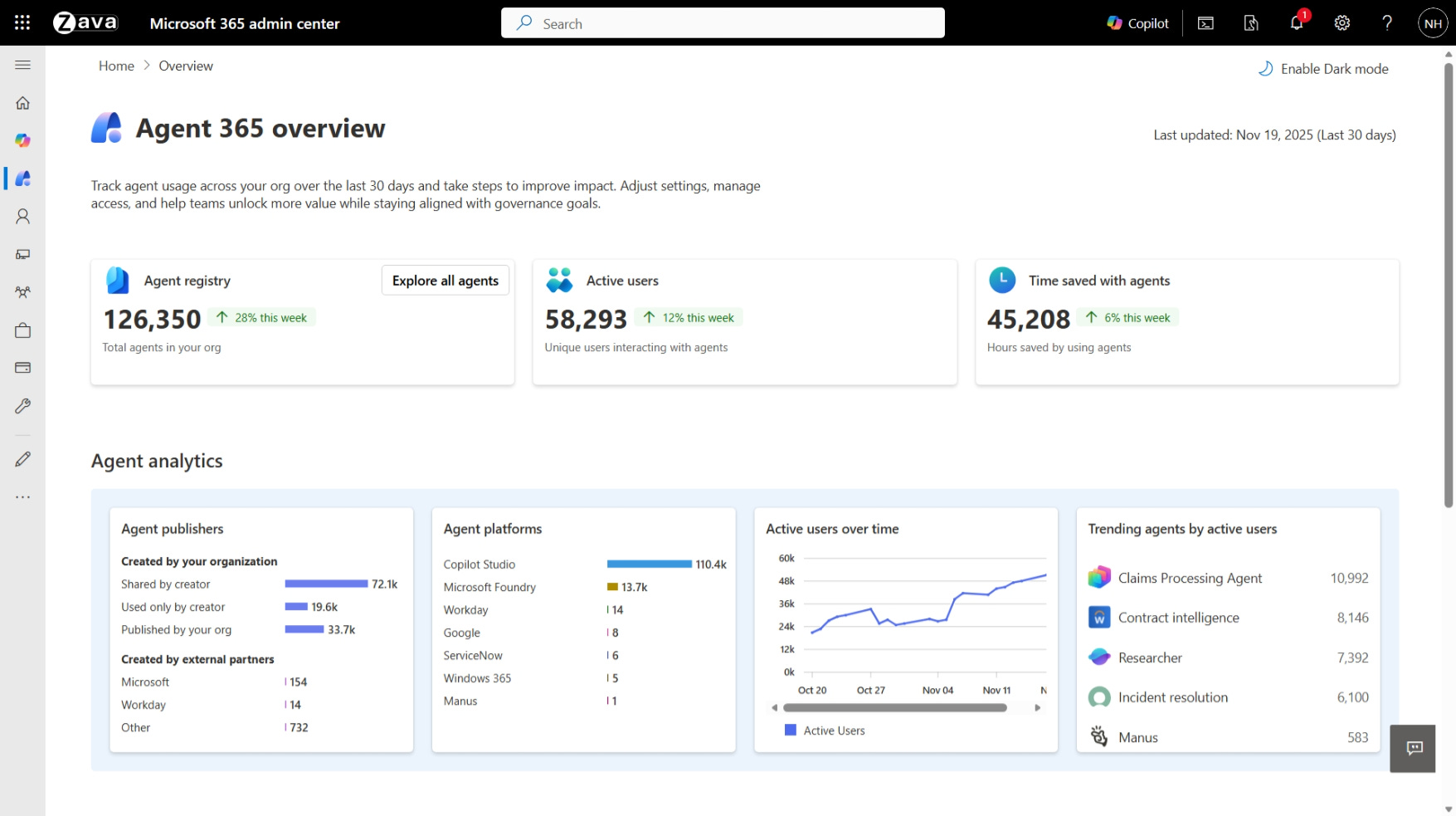
Microsoft Agent 365 is Microsoft’s control plane for AI agents. In plain language, that means it is a centralized layer for observing, governing, and securing the AI agents your organization builds, deploys, or discovers across Microsoft and third-party environments.
A control plane is the management layer that helps you see what exists, set rules, and enforce policy.
This matters because AI agents are not just chatbots. They can act across workflows, touch business systems, retrieve sensitive information, and complete tasks with a level of autonomy that traditional apps often do not have. Microsoft’s security documentation specifically frames agents as high-value targets because they interact with sensitive data and execute tasks across multiple systems.
According to Microsoft Learn, Agent 365 integrates with the Microsoft 365 admin center and extends Microsoft security capabilities across identity management, access control, security posture, detection and response, runtime defense, and data security. That means the conversation is not only about productivity. It is also about who created the agent, what the agent can access, how risky it is, and what happens if something goes wrong.
Microsoft also positions Agent 365 as a way to manage agents created in Microsoft Copilot Studio, Microsoft Foundry/Azure AI Foundry, and some third-party solutions. So this is bigger than one tool or one assistant. It is part of a broader operating model for agentic AI in the enterprise.
That is the key shift leaders should understand: Agent 365 is not another AI app. It is the operating layer for AI agents.
Action steps
Define Agent 365 internally as your AI agent management layer, not just a feature.
Inventory where agents already exist in your environment, even informally.
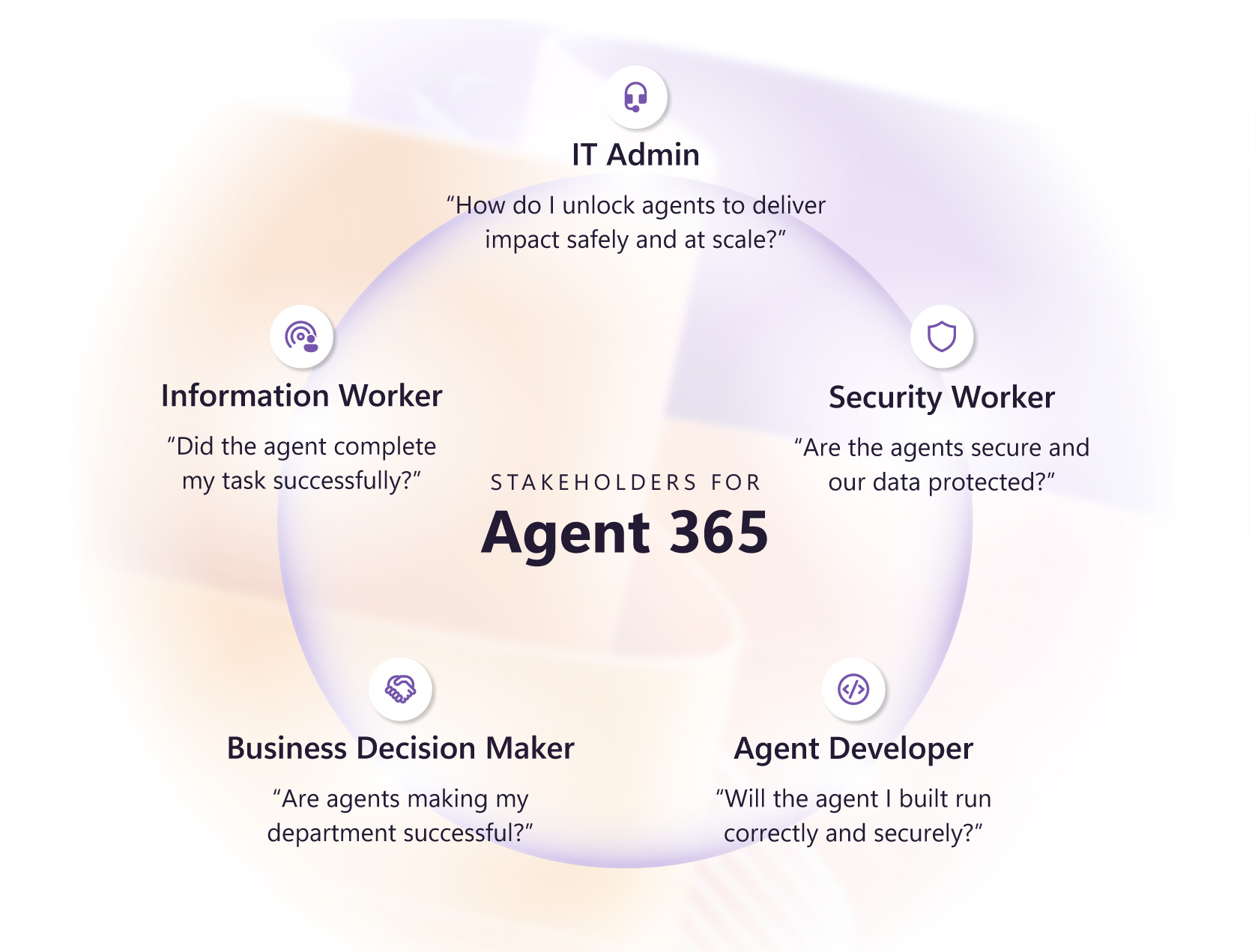
Align IT, security, and business stakeholders on one question: How will we govern AI agents before they scale?
Treat agent adoption like identity and access management, not just innovation.
Build an early policy around ownership, approvals, and access boundaries.
Why This Matters Now More Than It Did a Year Ago
A lot of organizations started with simple AI use cases: summarizing meetings, drafting emails, or creating first drafts of documents. Now the conversation is changing. Teams want AI agents that can monitor inboxes, route tickets, update records, pull data from systems, and take actions across departments.
That sounds exciting. It is also where the risks multiply.
An AI agent is software that can reason through a task, use tools, and take action with some level of autonomy.
When one person uses a prompt in a chat window, the blast radius is limited. When an agent has access to email, files, CRM records, internal knowledge, and approval workflows, the blast radius gets much larger. One misconfiguration can expose data. One over-permissioned agent can touch far more than it should. Microsoft’s documentation repeatedly emphasizes least privilege, conditional access, and runtime defenses for exactly this reason.
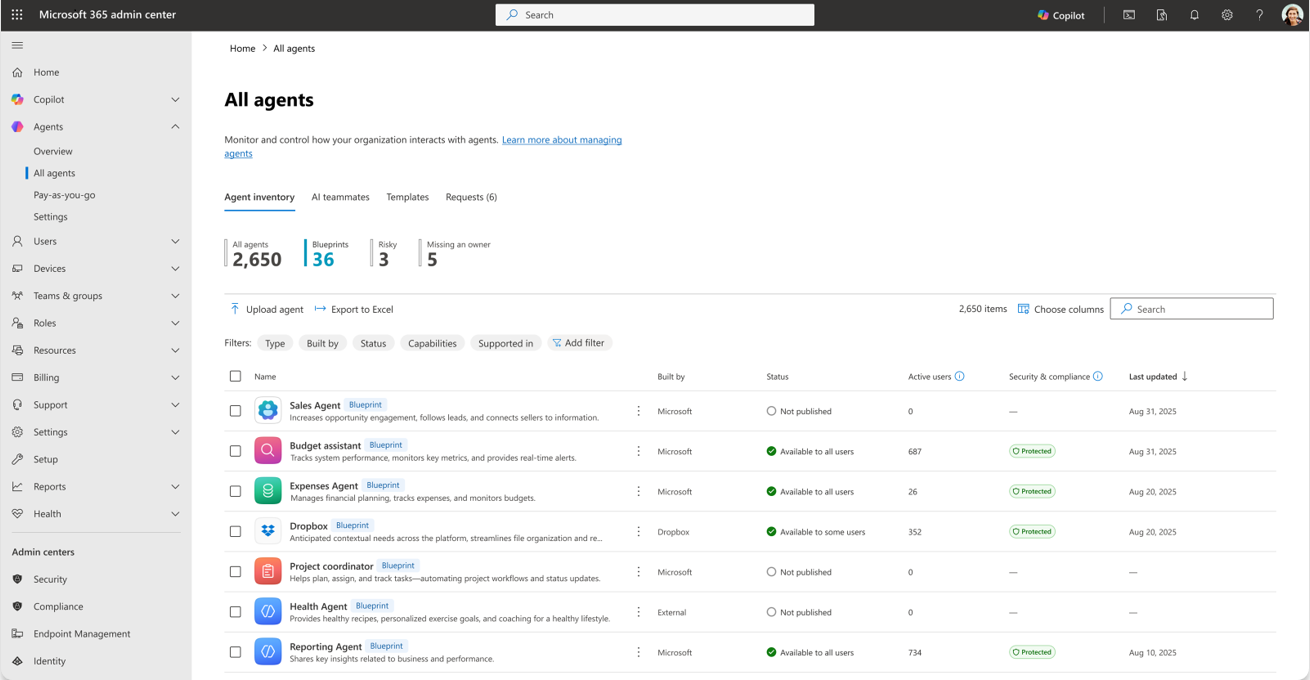
There is also a visibility problem. Business teams can build useful automations quickly. That is good for innovation, but it can create shadow agents, agents operating outside formal governance. Microsoft says Agent 365 helps organizations discover registered and shadow agents, which is one of the most important details in the entire story. You cannot govern what you cannot see.
And there is a leadership problem too. Many executives want AI adoption, but they do not want a fragmented mess of experiments, duplicate bots, risky connectors, and inconsistent controls. Agent 365 gives leadership a language they already understand: registry, access control, security, observability, and policy.
So the timing makes sense. As organizations move from AI experimentation to AI operations, they need an operating model that can scale.
Action steps
Review every current AI pilot and ask whether it is a tool, a workflow assistant, or a true agent.
Identify which systems agents may access: email, Teams, SharePoint, CRM, ERP, ticketing, HR, finance.
Create a simple “no production access without review” rule.
Flag any business-built automations that may already function like agents.
Move the leadership discussion from “Should we use AI?” to “How do we run AI responsibly at scale?”
The Real Value for Professionals: Career Growth, Leverage, and Trust
For individual professionals, Microsoft Agent 365 is valuable for a surprisingly practical reason: it helps you become the person who understands how AI gets adopted safely in the real world.
That is a career skill.
A governance model is a set of rules for who can create, approve, manage, and monitor something.
Many professionals focus only on prompting or productivity hacks. That helps in the short term, but it is not enough. The people who stand out in the next phase of AI adoption will be the ones who can connect business value, process improvement, security, and governance. Agent 365 sits right in that intersection.
Think about how this plays out in a real career. A project manager who understands agent inventory, ownership, and risk can help the business scale faster. A systems administrator who understands agent identity and access control becomes more strategic. A security analyst who understands AI posture management becomes more relevant as agents spread across the environment. Even a non-technical operations professional can become highly valuable by helping the business identify where agents save time without introducing operational risk.
Here is the deeper point: professionals who understand Agent 365 are not just learning a product. They are learning an enterprise pattern for the future of work.
A least privilege model means giving only the minimum access needed to do the job.
That pattern includes several career-friendly skills:
mapping workflows,
defining ownership,
reducing manual work,
documenting risk,
improving access control,
measuring business impact,
and communicating AI decisions to leadership.
Would you rather be known as the person who writes clever prompts, or the person who helps the business deploy AI responsibly and confidently?
That second identity will age much better.
A realistic story example
Imagine Priya, an operations manager at a 60-person company. She is not a full-time IT person, and she is not a developer. Her team wants an agent that triages incoming customer requests, drafts responses, and updates a shared system.
Without governance, this turns into a messy pilot. Who owns the agent? What mailbox can it read? Can it access confidential files? What happens if it starts surfacing sensitive information in the wrong workflow?
Priya uses the Agent 365 mindset, even before her company fully matures its tooling. She documents the owner, the sponsor, the systems the agent needs, the data it should never touch, and the review process before production rollout. Suddenly, she is not just “using AI.” She is leading AI adoption.
That is the professional opportunity.
Action steps
Learn the difference between a chatbot, an automation, and an AI agent.
Build your own vocabulary around agent identity, access, security posture, and governance.
Volunteer to help document one AI workflow in your organization.
Ask who owns each agent and who approves its access.
Add “AI governance and operational readiness” to your resume language where accurate.
Position yourself as someone who can connect productivity with security.
The Value for SMB Owners: Scale Without Losing Control
For small and midsize business owners, the value of Agent 365 is not theoretical. It is operational.
An SMB is a small to midsize business, often with limited IT time, budget, or staff.
Most SMBs do not need fifty agents. They need a few good ones that save time, reduce manual work, and do not create a security headache. That is where Agent 365 thinking becomes powerful. It helps SMB owners ask the right questions before AI sprawl begins.
For an SMB, scale usually means one of three things:
serving more customers without hiring at the same pace,
making existing teams more productive,
or reducing operational friction.
Agents can help with all three. They can support internal help desks, customer inquiry routing, knowledge retrieval, scheduling coordination, document summarization, and repetitive administrative work. But the risk for SMBs is often higher because they have lean teams. One over-permissioned agent or one poorly governed workflow can have an outsized impact.
Microsoft’s public materials position Agent 365 as a way to observe, secure, and govern agents from one place, using familiar administrative and security capabilities. For an SMB, that translates into fewer blind spots and less dependence on tribal knowledge.
This is especially important when owners or general managers approve new tools quickly. AI projects often start in good faith: “Let’s save time.” But soon you have one sales agent, one support agent, one HR helper, and a few experimental bots nobody fully tracks. Sound familiar?
What SMB leaders need is disciplined simplicity:
clear ownership,
clear permissions,
clear boundaries,
and clear business purpose.
Agent 365 supports that operating model by aligning agent management with identity, access, and security controls rather than leaving it scattered across disconnected tools.
Action steps
Start with one or two high-friction workflows, not ten.
Require an owner and backup owner for every agent.
Define what each agent is allowed to read, write, and trigger.
Avoid broad access “just in case.”
Review whether your SMB already has shadow agents or unsanctioned automations.
Treat every agent like a digital worker that needs onboarding, supervision, and review.
The Value for Leadership Teams: Governance, Confidence, and Better Decisions
Leadership teams should care about Agent 365 because it translates AI from a collection of pilots into something that can be managed as an operating capability.
An operating capability is something a company can run consistently, measure, improve, and trust.
That matters because executives are under pressure from both sides. On one side, teams want speed. On the other side, legal, security, and compliance functions want control. Agent 365 is valuable because it helps bridge those competing demands by creating one governance layer for agents across the organization.
Leadership does not need to know every technical detail. But leaders do need answers to these questions:
How many agents do we have?
Who owns them?
What data can they reach?
Where are the risks?
How do we know an agent is still operating within policy?
Those are management questions, not just technical questions.
Microsoft highlights visibility, policy enforcement, threat detection, runtime defense, and data protection as core capabilities around Agent 365. For leadership teams, that means AI can move from “interesting demos” to “governed digital workforce strategy.”
There is also a cultural benefit. When employees see that leadership has a credible framework for deploying agents, adoption improves. Teams stop guessing. Risk teams stop feeling bypassed. IT stops being the last-minute cleanup crew. Governance becomes an enabler, not a blocker.
That may be the most thought-provoking part of this whole topic: the future winners in AI may not be the companies with the most agents. They may be the companies with the best-managed agents.
Action steps
Ask for an executive-level agent inventory and ownership model.
Require AI agent use cases to map to business outcomes, not novelty.
Create a cross-functional AI review group with business, IT, and security input.
Define what “approved for production” means for an agent.
Request regular reporting on agent risk, access scope, and business impact.
Security Is Not a Side Note. It Is the Value Multiplier.
Many people hear “security” and think “friction.” In this case, security is what makes AI usable at scale.
A runtime defense is protection that works while the agent is actively operating.
Microsoft’s documentation breaks Agent 365 security into several layers:
identity management,
access control,
security posture,
detection and response,
runtime defense,
and data security.
That structure is important because agents introduce new kinds of risk. An agent might be manipulated by prompt injection. It might be given too much access. It might expose sensitive data through a connected workflow. It might become a hidden path into more critical systems. Microsoft specifically references prompt injection, malicious traffic, data exfiltration risk, attack paths, and conditional access as part of the security model.
A prompt injection attack is when malicious instructions try to manipulate an AI system into ignoring its intended rules.
For professionals, this means security awareness becomes a core AI skill. For SMB owners, it means responsible AI is not just about ethics or productivity. It is also about resilience. For leadership teams, it means the best AI strategy is inseparable from security strategy.
There is a mindset shift here. Too many organizations treat AI security like a review step at the end. But with agents, security has to be built into the design:
who the agent is,
what the agent can do,
what data it can touch,
and how its activity is monitored over time.
That is why Agent 365 matters. It gives organizations a way to extend existing controls into a new class of digital actors.
Action steps
Build agent access from the minimum required permissions upward.
Use the same seriousness for agent identity that you use for human identity.
Separate test agents from production agents.
Document sensitive data sources before connecting them to any agent.
Include monitoring and response planning before rollout, not after.
A Practical Get-Started Checklist for Professionals, SMBs, and Leadership Teams
You do not need a massive transformation plan to begin. You need a disciplined starting point.
1. Identify your first agent candidates
Choose workflows that are repetitive, measurable, and low-risk. Good early examples include internal knowledge search, support triage, FAQ assistance, and routine document preparation.
Pick 1–3 use cases only.
Prioritize time savings and process consistency.
Avoid high-risk financial or regulatory workflows first.
2. Create basic ownership
Every agent needs a named owner, a business sponsor, and a review path.
Assign one business owner.
Assign one technical or administrative contact.
Decide who approves access changes.
3. Define allowed access
This is where many projects get sloppy. Be specific.
List every system the agent needs.
List every system it does not need.
Start with read-only access where possible.
Avoid broad file and mailbox permissions.
4. Set governance guardrails
Even small organizations need simple rules.
Define who can build agents.
Define who can publish agents.
Define who can connect data sources.
Define when security review is required.
5. Review data sensitivity
Not every dataset should be available to every agent.
Mark sensitive data sources.
Use labeling and policy where available.
Prevent agents from reaching confidential material without a business reason.
6. Plan for monitoring
If an agent fails quietly, the problem may go unnoticed until damage is done.
Log important actions.
Review usage regularly.
Investigate unusual behavior.
Retire agents that no longer have a clear purpose.
7. Check readiness for Microsoft’s ecosystem
Microsoft’s public documentation indicates that some Agent 365 and Entra Agent ID capabilities are tied to the Frontier program in Microsoft 365 and require a Microsoft 365 Copilot license with Frontier enabled. Availability may evolve, so teams should verify current eligibility and rollout status before planning broadly.
Confirm your licensing and program access.
Review what is generally available versus preview.
Avoid building strategic plans on features you have not validated in your tenant.
8. Measure value, not just activity
An agent that runs often is not automatically useful.
Define one success metric per agent.
Measure time saved, response speed, error reduction, or workflow consistency.
Remove agents that create more complexity than value.
Audience Adaptation: Why This Topic Matters to Different People
For a professional, Agent 365 matters because AI adoption is moving from curiosity to accountability. The people who understand how to deploy AI safely, explain its risks, and connect it to business outcomes will become more valuable. You do not need to become a deep specialist overnight. You need to become the person who sees the whole system.
For an SMB owner, Agent 365 matters because growth without control becomes expensive. A few useful agents can improve service, speed, and staff capacity. But unmanaged agents can create confusion, data exposure, and rework. In a lean business, simplicity is a competitive advantage.
For a leadership team, Agent 365 matters because it offers a way to scale AI without losing governance. It helps shift the discussion from isolated pilots to enterprise operating discipline. That is how AI becomes credible inside the business.
Picture three scenarios:
A marketing manager wants an agent to speed up campaign prep.
A 40-person service company wants an agent to handle intake and routing.
An executive team wants a roadmap for enterprise AI with fewer surprises.
These are different situations, but they all lead to the same need: visibility, ownership, access control, and trust.
And that is why Agent 365 is worth paying attention to now.
Final Thoughts
Microsoft Agent 365 is important not because it makes AI sound bigger, but because it makes AI more manageable. It gives organizations a framework for treating agents as real operational entities that need identity, oversight, security, and governance.
For professionals, that means new career leverage. For SMB owners, it means practical scale with less chaos. For leadership teams, it means a clearer path from experimentation to trusted execution. The deeper lesson is simple: the next stage of AI success will belong to organizations that can manage agents with as much discipline as they manage people, apps, and data.